
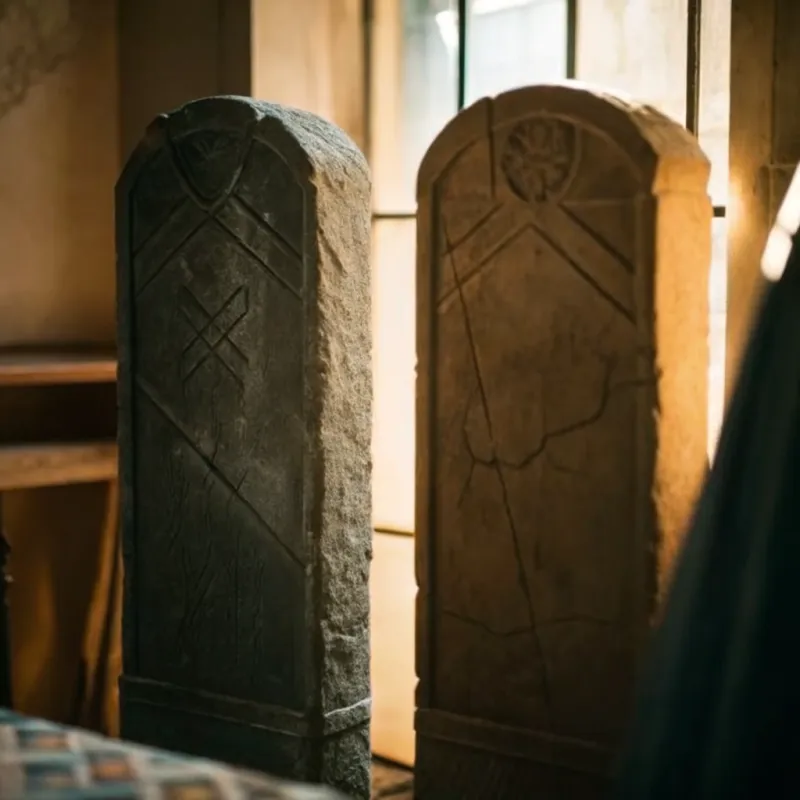
The Ten Commandments
Ten days through God's good law — and the grace it points us to.
On Mount Sinai, God gave His people ten commandments — not to earn His love, but because He had already rescued them. Over ten days, your family will walk through each one: God's good design for life, our need for the grace found in Jesus (who kept the law perfectly in our place), and how love for God shapes everything we do.
How to use this
Pick a time you already gather — dinner, or just before bed — and keep it there. The whole thing takes about ten minutes.
Each day
- Read the passage together. On a busy night, just read the memory verse — that counts.
- Read the short devotion out loud.
- Talk through the questions. Let everyone answer in their own words; there are no wrong answers.
- Say the memory verse together, and try to remember it tomorrow.
- Take turns being the reader — let the kids have a night.
- Missed a day or three? That’s okay. Pick the thread back up. It’s a rhythm, not a streak.
- Day 1
No Other Gods
Exodus 20:1-3; Deuteronomy 6:4-5God begins by reminding His people who He is — the One who rescued them from slavery — and then says, “You shall have no other gods before me.” A “god” is whatever we love and trust most. God isn't being selfish; He made us, He loves us, and He alone can truly satisfy our hearts. To love Him with all our heart, soul, and strength is the first and best thing.
Talk about it
- What are some things people make into “gods” — loving or trusting them more than God?
- Why does God deserve first place in our hearts?
- What would it look like to love God with all your heart this week?
Memory verse · Exodus 20:3
““You shall have no other gods before me.”
- Day 2
No Idols
Exodus 20:4-6; 1 John 5:21God tells His people not to make idols to worship. We don't carve statues today, but we still make idols — anything we treat as more important than God: money, success, popularity, even good things. John ends his whole letter with one simple warning: “keep yourselves from idols.” God wants our whole hearts, not leftovers.
Talk about it
- What is an “idol,” and what might idols look like today?
- Why does God want our worship for Himself alone?
- Is there anything competing with God for first place in your life?
Memory verse · 1 John 5:21
“Little children, keep yourselves from idols.”
- Day 3
God's Name
Exodus 20:7; Matthew 6:9“You shall not misuse the name of the Lord your God.” God's name stands for who He is — holy and worthy of honor. To misuse it is to treat God as common, or to speak of Him carelessly. Jesus taught us to pray, “Our Father in heaven, hallowed be your name” — may your name be treated as holy. We honor God's name by how we speak of Him and how we live.
Talk about it
- What does a name stand for? What does God's name stand for?
- What are some ways people misuse God's name?
- How can the way we live “honor” God's name?
Memory verse · Exodus 20:7
““You shall not take the name of Yahweh your God in vain, for Yahweh will not hold him guiltless who takes his name in vain.”
- Day 4
The Sabbath
Exodus 20:8-11; Mark 2:27-28God set apart one day in seven for rest and worship. Why? Because we are not machines — we need rest, and we need to remember that the world keeps going because God holds it, not because we never stop. Jesus said, “The Sabbath was made for man,” a gift and not a burden. And He offers an even deeper rest: rest for our souls in Him.
Talk about it
- Why do you think God built rest into every week?
- How can resting remind us to trust God instead of ourselves?
- What would a restful, worshipful day look like for your family?
Memory verse · Exodus 20:8
““Remember the Sabbath day, to keep it holy.”
- Day 5
Honor Parents
Exodus 20:12; Ephesians 6:1-3“Honor your father and mother.” This is the first commandment with a promise attached. To honor parents means to respect them, obey them, and care for them. God places children in families with parents to love and guide them — and learning to honor the authority God gives is part of learning to honor God Himself.
Talk about it
- What's the difference between just obeying and truly honoring?
- How does honoring parents help us learn to honor God?
- What is one way you can honor your parents today?
Memory verse · Exodus 20:12
““Honor your father and your mother, that your days may be long in the land which Yahweh your God gives you.”
- Day 6
Do Not Murder
Exodus 20:13; Matthew 5:21-22“You shall not murder.” Human life is precious because every person is made in God's image. But Jesus took this even deeper: He said anger and hatred in the heart are where murder begins. God cares not just about our hands but our hearts. The good news is that He can change an angry heart, and teach us to love even those who are hard to love.
Talk about it
- Why is every human life so valuable to God?
- Why did Jesus connect murder with anger in the heart?
- Is there anger or unkindness you can bring to God to change?
Memory verse · Exodus 20:13
““You shall not murder.”
- Day 7
Do Not Commit Adultery
Exodus 20:14; Matthew 5:27-28“You shall not commit adultery.” God designed marriage as a faithful, lifelong promise between a husband and a wife, and He calls it good and worth protecting. Jesus taught that faithfulness begins in the heart and mind, not just our actions. For a family, this commandment teaches that promises matter, purity matters, and God's design for love is a gift to honor.
Talk about it
- Why are promises so important to God?
- How does keeping our hearts and minds pure honor God?
- How can our family value and protect God's good design for marriage?
Memory verse · Exodus 20:14
““You shall not commit adultery.”
- Day 8
Do Not Steal
Exodus 20:15; Ephesians 4:28“You shall not steal.” God cares about what belongs to others, and stealing breaks trust and love. But Paul gives the beautiful flip side: the one who used to steal should “steal no longer, but work, doing something useful, that he may have something to share with anyone in need.” God doesn't just want us to stop taking — He wants to make us generous givers.
Talk about it
- How does stealing hurt people and break trust?
- What's the difference between just “stopping” and becoming generous?
- How could your family be generous with what God has given you?
Memory verse · Exodus 20:15
““You shall not steal.”
- Day 9
Do Not Lie
Exodus 20:16; Colossians 3:9-10“You shall not give false testimony” — do not lie. God is a God of truth; He cannot lie. When we lie, we break trust and act unlike our Father. Paul says, “Do not lie to one another, since you have put off the old self.” Because God has made us new in Jesus, we can put off lying and learn to speak the truth in love.
Talk about it
- Why does lying hurt relationships so deeply?
- Why is telling the truth part of becoming “new” in Jesus?
- Is there a truth you need to tell, even though it's hard?
Memory verse · Exodus 20:16
““You shall not give false testimony against your neighbor.”
- Day 10
Do Not Covet
Exodus 20:17; Hebrews 13:5“You shall not covet” — do not crave what belongs to someone else. This last commandment goes straight to the heart: it isn't about our hands but our wants. The cure is contentment, and Hebrews shows us how: be content with what you have, “for he has said, ‘I will never leave you.’” When we have God, we have enough. And if these ten days have shown us how often we fall short — that is the point. The commandments send us running to Jesus, who kept them perfectly in our place and gives us new hearts to love them.
Talk about it
- What does it mean to “covet,” and why is it a heart problem?
- How does knowing God will never leave us help us be content?
- Looking back over all ten — how do the commandments point us to our need for Jesus?
Memory verse · Hebrews 13:5
“Be free from the love of money, content with such things as you have, for he has said, “I will in no way leave you, neither will I in any way forsake you.””
Scripture quotations are from the World English Bible (public domain). Devotions and reflection questions © Genesis Labs.
Want this built into your week?
Shprd holds the verse, who's read it, and the small next step — woven into the rest of your family's week. We onboard a few families at a time.